
Automated Mitre Saw Upgrades: Retrofit Your Existing Saw

Why Should You Retrofit Your Existing Mitre Saw Instead of Buying New?
Retrofitting your existing saw is the smartest way to introduce automation because it delivers massive productivity gains without the horrifying price tags of buying a brand-new, fully integrated European or American machine. It allows you to upgrade your factory floor incrementally.
How Does a Mitre saw retrofit Offer Cost Savings for Small Businesses?
A Mitre saw retrofit provides an incredibly fast return on investment. With an entry-level system like the Kangastop Tradesman starting around $5,990, the payback period for a small business is typically less than 12 months.
Instead of parting with a 50% deposit for an expensive overseas machine, you get a locally supported, value-for-money alternative. It allows you to get 8 hours of cutting work done in just 4 hours, effectively giving you back half a day's labour per operator.
How Can You Ensure Minimal Downtime During Installation?
Upgrading your saw shouldn't shut down your factory for a week. Retrofit kits are designed to be bolted directly onto your existing setup with minimal fuss.
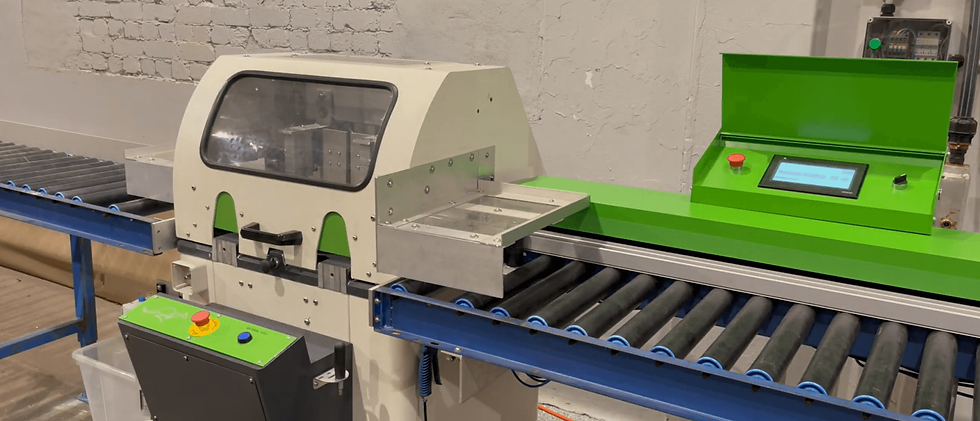
For instance, we use a simple Steel Conveyor Mounting Kit. By drilling just a few 8 mm holes, you can attach the new automated stop to your existing steel-framed conveyors. This means you can be up, calibrated, and running on the exact same day.
What is the Best Way to Future-Proof Your Equipment?
Future-proofing means investing in industrial-grade components that won't fail you when production ramps up. You want a system that uses universally recognised parts, not proprietary overseas tech that is impossible to replace.
Our systems are built using premium Japanese electronics and European pneumatic parts. Combine this with our Australian-made extruded aluminium housing and a 10-year warranty, and you have a machine built for the long haul.
How Does Mitre Saw Automation Actually Work?
Automation works by using industrial computers to calculate precise distances and move a physical stop along a motorised rail. It takes the guesswork out of material length positioning.
What are Programmable saw positioning Systems?
Programmable saw positioning relies on a Programmable Logic Controller (PLC)—the industrial computer brain of the machine. The PLC calculates the exact distance to move based on pulses sent to a servo-driven motor.
This motor is connected to a fixed-pitch, steel-reinforced drive belt. The constant feedback loop between the encoder and the PLC ensures the stop moves to the perfect position every single time.
How Does Automatic Stop Technology Function?
There are two main ways this technology operates: bump stops and push stops. With a bump stop, the machine moves to a set length, and the operator manually feeds the material until it "bumps" the stop before cutting.
With a push stop, like the Kangastop Plus, the machine physically pushes the material through the saw. This leads to true semi-automatic cutting, where the operator simply trims the end, enters the required lengths, and lets the machine do the heavy lifting.
How Does Digital Integration Deliver Precision Cuts?
Digital integration means the HMI, PLC, and servo motor communicate flawlessly to achieve repeatable accuracy of ±0.1 mm. This level of precision is impossible to maintain manually over an 8-hour shift.
Because the measurements are digital, the cuts are identical every time. This completely eliminates the bottleneck of assembly staff having to manually trim sections that were cut slightly too long or short.
Where Are Automated Mitre Saws Used in the Real World?
We initially designed these systems for our own aluminium louvre manufacturing, but today, they are transforming operations across timber processing, window fabrication, and beyond.
How Does It Improve Custom Cabinet Manufacturing?
In cabinetry and wardrobe manufacturing, precision is everything. An automated stop ensures every panel and frame is cut exactly to spec.
By integrating optional label printers that produce low-tack labels in the exact order of the cuts, cabinet makers never mix up parts, drastically speeding up the final assembly process.
Why is it Essential for Aluminium Extrusions for Windows and Doors?
Aluminium window manufacturers process massive volumes of lightweight extrusions. Walking up and down a 6-metre length of aluminium to set a manual stop is incredibly inefficient.
With an automated mitre saw system, operators simply stand at the saw, input the dimensions on the screen, and let the machine position the extrusions perfectly. We haven't found a single material yet that can't be processed using our systems.
How Does it Handle High-Volume Production Runs?
For industrial packing and high-volume timber operations, waste reduction is just as critical as speed. We worked with a company called Acme Case who upgraded to our system.
By using the built-in material optimisation software, they reduced their raw material waste generation from 12 bales down to 8 bales per month—a massive 30% reduction in raw material usage.
This was an unusually large saving, we normally would expect to enjoy a material reduction in the 12 - 15% range.
What Are the Key Benefits of Upgrading to an Automated Mitre Saw?
The core benefits of upgrading is halving your processing time, maximising your material yield, and creating a safer, less exhausting environment for your team.
How Does Automation Reduce Operator Error and Fatigue?
Manual measuring is physically exhausting and prone to human error, especially late in a shift. An automated system removes the physical toll of walking and manually adjusting heavy stops.
By keeping the operator safely positioned at the saw interface, you reduce fatigue, lower the chance of misread tape measures, and create a much safer working environment.
Why Does it Lead to Faster Job Changes and Setup?
Changing from a 2-metre cut to a 1.5-metre cut takes just seconds on an HMI touchscreen. On a manual system, it requires un-clamping a stop, walking it down the line, measuring, and re-clamping.
This instant digital adjustment means your team spends their day actually cutting material, rather than setting up to cut material.
How Does it Guarantee Improved Material Consistency?
When the PLC and servo motor control the positioning, every cut is identical. This consistency guarantees a higher quality end-product and eliminates the hidden costs of rework and rejected parts.
Frequently Asked Questions About Mitre Saw Retrofits
Can I fit an automated stop to my existing saw?
Yes. Our systems are designed to be retrofitted to almost any existing drop saw, upcut saw, drill press, or punch system. With our universal mounting kits, integration is straightforward and cost-effective.
Is the software difficult for my operators to learn?
Not at all. The HMI touchscreen is designed to be highly intuitive. If an operator can use a smartphone or a standard calculator, they can easily operate our measuring systems.
What happens if the machine breaks down?
Because we manufacture right here in Australia using universally available industrial components, you won't be waiting weeks for a proprietary part from overseas. Plus, we back our systems with an industry-leading 10-year warranty.
How Can You Start Your Automation Journey with Kangastop?
If you are tired of losing money to slow manual measuring, operator errors, and excessive material waste, it's time to upgrade. A Kangastop automated measuring system is the most cost-effective way to modernize your factory.
Reach out to our Australian-based team today. We offer free factory demonstrations, Zoom consultations, and no-obligation quotes to help you find the perfect solution for your business.


Comments