
The Ultimate Automated Cutting Systems & Digital Stops Guide
Updated: Jun 28
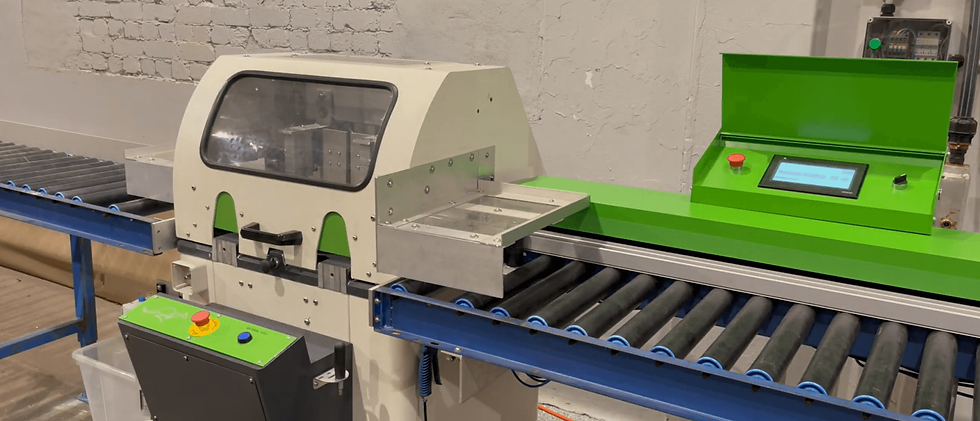
What is an Automated Cutting System and How Will It Reduce Factory Labour Costs?
Automated Cutting Measuring Systems go by many different names, such as digital stops, length stop measuring systems, digital miter saw fences, etc. but they are all effectively the same solution, with different levels of automation.
An automated cutting system is a computer-controlled measuring machine that replaces manual tape measures and mechanical fences on your factory floor by using a motorised stop arm that moves to the exact measurement you type into the touchscreen. It can remain at the set measurement, or move through a series of required measurements as a fixed physical reference to cut material.
To use the system, you simply place your material on the conveyor and you either slide it along the bench until it touches the stop arm, or the machine’s motorised unit grips the material and feeds it through the saw for you. Check out our video of one of out automated cutting systems in action below:
The core technology behind these measuring systems has been around for many years, and it is basically the same proven system used in computer-operated milling machines. Instead of relying on an operator's eyesight, the machine handles the positioning with extreme accuracy and your operators are no longer performing physically repetitive tasks.
This shift away from manual labour helps small to medium businesses increase their output without needing to hire additional staff.
If you are still relying on operators to walk up and down a bench to adjust a mechanical fence, you are losing money to human error and slow processing times. Upgrading to an automated system eliminates manual measuring entirely and ensures every cut is correct down to the millimetre. This means your assembly staff will never have to waste time trimming sections that were cut slightly too long or short.
How Do Automated Length Stop Measuring Systems Work?
An automated saw measuring system operates through a straightforward sequence of electronic commands and mechanical movements.
There are different levels of automation with different solutions, but here is exactly how a push-style digital stop operates on the factory floor:
The operator sets the raw material onto the infeed conveyor and the program trims the end to create a clean starting edge.
The operator enters the required cut lengths and quantities into the Human-Machine Interface (HMI) touchscreen, or loads them via a USB stick.
The Programmable Logic Controller (PLC) calculates the necessary distance and sends the required number of pulses to the servo drive system.
The motor turns the drive pulleys and moves the steel-reinforced belt to push the material into the exact position.
The operator makes the cut, and the machine automatically pushes the material forward for the next measurement.
Understanding how these machines achieve repeatable accuracy of ±0.1 millimetres requires looking at the industrial-grade components that drive them. We build our machines using straightforward, highly reliable parts so they operate day in and day out without complicated maintenance:
Component | Practical Function |
HMI (Human-Machine Interface) | The industrial touchscreen where the operator enters dimensions and controls the machine. |
PLC (Programmable Logic Controller) | This is the computer brain of the machine that calculates the exact distance the stop needs to move and sends electronic pulses to the motor. |
Servo Motor & Encoder | Drives the physical movement and provides constant feedback to ensure 0.1 mm accuracy. |
Steel-Reinforced Belt | Connects the motor to the stop and moves heavy materials without stretching or slipping. |
Extruded Aluminium Housing | Protects the internal drive components from factory debris and provides a rigid track. |

What Are the Different Types of Cutting Measuring Systems?
Depending on your required output and budget, there are three primary levels of automation available to manufacturers. Each system is designed to take the manual labour out of the cutting process and deliver reliable precision.
What is a Bump Stop System?
A bump stop, such as the entry-level Kangastop Tradesman, provides a highly affordable entry into automated measuring. The operator enters the required length on the HMI screen, the stop moves into position, and the operator manually slides the material against the stop before cutting. This simple upgrade instantly doubles cutting productivity when compared to a manual tape measure.
What is a Push Stop System?
For processing heavier materials or higher volumes, a push stop handles the physical labour. With a model like the Kangastop Plus, the operator enters the desired lengths, and the machine automatically pushes the material through the saw. The upgraded motor on these units allows the operator to process sections up to 50 kg in weight, and it significantly reduces operator fatigue.
What is a Fully Integrated Automated Saw System?
An integrated system automates the broader cutting sequence so the operator can step away and perform other tasks. On models like the Kangastop Pro, the PLC autonomously manages the pneumatic clamps, turns on the blade coolant, and lowers the safety hoods before making the cut. We strongly advocate for these "turn key" integrated solutions where we supply both the measuring system and the saw, as the customer only has to make one phone call for support and we take full responsibility for the entire setup.
Digital Stops in Australian Manufacturing: Timber, Windows, and Beyond
We see a major market segment in the aluminium window industry, but the application of this technology goes much further. Our machines are used daily by curtain and blind manufacturers, timber truss builders, shower screen fabricators, and wardrobe manufacturers. Any business that requires repetitive, accurate measuring can benefit from stepping away from manual tape measures.
What is the Bottom Line Return on Investment for Small Businesses?
We designed our first machine out of necessity to reduce our own labour costs, and we base all of our designs in value for money tangible operational outcomes. Because we avoid the exorbitant prices charged by European and US suppliers, the payback period for a small business investing in an entry-level unit is consistently under 12 months.
Beyond raw speed, the cutting measuring system delivers massive financial returns through material savings. By using the integrated optimisation program on our push stop models, our customers routinely achieve a 12 to 15% reduction in raw material wastage. The software calculates the most efficient cutting sequence, and it stops operators from throwing away usable offcuts.
Upgrading to an automatic wood cutting machine or aluminium processing system also frees up your workforce for continuous production. In a practical factory environment, an automated saw system can easily reclaim 4 hours of an operator's 8-hour day because the machine handles the measuring and the physical pushing.
Manual Measuring vs Length Stop Systems: The Key Differences
The most significant difference between manual measuring and automated systems is the immediate impact on your bottom line. An automated system removes the physical walking, the constant tape measuring, and the inevitable costly miscuts that occur when operators get fatigued.
Manual vs Automated Measuring Comparison
Feature | Manual Measuring Systems | Automated Length Stop Systems |
Cutting Time | Highly labour-intensive; requires walking up and down the bench. | Reduces processing time by over 50%, doubling productivity. |
Accuracy | Prone to human error, resulting in parts that are too long or short. | Repeatable ±0.1 mm accuracy, eliminating assembly fit issues. |
Material Waste | High waste generation due to miscuts and poor manual planning. | 12-15% reduction in raw material wastage using optimisation programs. |
Operator Effort | High physical fatigue from constant clamp adjustments. | Operator simply enters the length on an HMI touchscreen. |
How Do Optional Upgrades Improve Factory Workflow?
Every workshop has different operational bottlenecks, and we have developed specific mechanical upgrades to solve them. These additions integrate directly into the HMI and the PLC to make the operator's job simpler and safer.
If your operators are cutting a wide range of section sizes, they often waste time constantly adjusting clamp positions. By upgrading to a long travel clamping system with full-travel pneumatic cylinders, you eliminate the need for manual adjustment and save around an hour a day in setup time.
Factory floor space is often at a premium for small to medium businesses. We offer rear operating clamping options that position the cylinders behind the cutting fence, and this upgrade allows you to recover 200 to 300 millimetres of valuable factory floor space right in front of the saw.
Why Does Local Manufacturing and Support Matter?
When you invest in factory machinery, reliable operation and minimal downtime are critical. We proudly manufacture our systems right here in Australia, and this ensures you have ready access to spare parts and local support without waiting on overseas shipping.
By using high-quality industrial components and maintaining local oversight of our production, we provide a massive practical advantage for our customers. This local reliability allows us to confidently back our machines with an industry-leading 10-year warranty covering both parts and labour.
Frequently Asked Questions
What is the typical payback period for a digital stop?
With an entry-level digital bump stop starting from $5,990 for a 3.0m unit, the payback period for a small business is typically less than 12 months due to the massive reductions in labour costs and the elimination of operator cutting errors.
Can a digital stop push heavy materials?
Yes. While basic models require the operator to push the material up to the stop, upgraded push stop models feature a larger motor capable of automatically pushing sections weighing up to 50 kg directly into the cutting zone.
Do I need special software to use the machine?
No. You can manually enter dimensions directly into the HMI touchscreen on the factory floor. For improved efficiency, our systems also include an integrated optimisation program where cut lists can be loaded via a standard USB stick.
What industries can benefit from a digital stop?
We see major demand in the aluminium window industry, but the technology is used by timber truss builders, shower screen fabricators, wardrobe manufacturers, and sign makers. We have not come across any material to date which cannot be processed through our systems, and for lighter sections like blinds, we simply use more rollers on the conveyor to support the material.
Do I need to replace my existing saw to automate my cutting?
No. We provide conveyor mounting kit that allows our measuring systems to be easily retrofitted to most existing framed conveyors. However, if you are looking for a complete factory upgrade, we recommend our turn key integrated saws to avoid complicated setup issues.
How does the optimisation program work?
The software calculates the exact amount of raw material needed for a job and determines the most efficient cutting sequence to minimise waste. You can enter the data directly into the HMI touchscreen, or your purchasing department can load the cut list into the machine via a USB stick.
If you are looking to step away from manual measuring and want to discuss how an automated cutting system will fit into your factory floor, give me a phone call. Alternatively, you are always welcome to arrange a visit to our factory in Riverstone, NSW, or we can set up a Zoom demonstration to run through your specific cutting needs.
Transform Your Factory with Kangastop Digital Stops
Upgrading to an automated measuring system is the most practical step you can take to reduce your labour costs, eliminate waste, and increase your factory's output. We build these systems out of necessity to solve real problems on the factory floor, and we are ready to help you find the right setup for your specific cutting needs.
If you would like to see how a digital stop works in person, I invite you to visit our factory in Riverstone, Western Sydney, NSW. Alternatively, we can arrange a direct phone call or a Zoom demonstration to discuss your workshop's requirements.


Comments